
Introduction
If you’re searching for solo ads, you’re likely trying to answer one serious question:
Can I buy traffic and actually make money — or is this just another way to burn cash?
Solo ads have been around for years. Some marketers swear by them. Others call them overpriced, low-quality traffic.
The truth?
Both sides are right — depending on how you use them.
In this guide, you’ll learn:
- What solo ads really are (no vague definitions)
- How solo ads traffic actually works behind the scenes
- Whether solo ads for affiliate marketing still convert in 2026
- Realistic costs (including the truth about cheap solo ads)
- The best solo ad providers and marketplaces
- How to buy solo ads without getting scammed
- And the funnel structure that separates profit from loss
This isn’t theory.
It’s built on real testing, real numbers, and practical strategy.
Let’s break it down properly.
What Are Solo Ads?
At its core, a solo ad is simple:
You pay a solo ad vendor who owns and manages an email list in your niche to promote your offer to their subscribers.
That’s it.
But here’s what most beginners misunderstand.
You’re not buying impressions.
You’re not buying exposure.
You’re buying clicks.
That’s why solo ads traffic is sold on a cost-per-click (CPC) basis.
How Solo Ads Traffic Actually Works
- A vendor builds an email list in a niche (usually MMO, biz opp, online marketing, crypto, trading, Health & Wellbeing, Weight Loss, Supplements, Nutra, Software & Apps, and etc).
- You provide them with:
- Your landing page URL
- Your email swipe
- They email their list.
- You pay for the number of unique clicks delivered.
If you buy 100 clicks, you receive 100 visitors to your page. Some vendors mostly add bonus clicks (5-10%).
No SEO waiting.
No ad account approval.
Traffic starts in almost 24 hours (Order delivery depends on the vendor’s demand).
Why Solo Ads Became Popular in Affiliate Marketing
Solo ads became popular because:
- They require no technical or ad skills.
- There is no risk to Facebook & Google ad accounts.
- You don’t need to write complex ad creatives.
- You can grow an email list quickly.
That’s why solo ads for affiliate marketing exploded in the make-money-online niche.
For affiliates, the model looks attractive:
Buy traffic → Capture leads → Promote offer → Follow up → Monetize backend.
But here’s the reality.
Solo ads amplify your funnel.
They do not fix a broken one.
If your opt-in page is weak, solo ads will expose it.
If your email sequence is poor, solo ads will reveal it fast.
That’s why understanding how they truly work matters before you decide to buy solo ads.
How Solo Ads Work (Behind the Scenes)
Most blogs explain solo ads at the surface level.
Very few explain the mechanics that actually determine whether you profit or lose money.
Let’s break down the real infrastructure.
1 . The Solo Ad Vendor Model
A solo ad vendor builds an email list — usually in niches like:
- Make money online (MMO)
- Affiliate marketing
- Crypto
- Biz opportunity
- Personal development
- MLM & Network Marketing
- Biz opp
- Health
- Weight Loss
- Fitness and Travel.
They acquire subscribers through:
- Lead magnets
- Giveaways
- Paid ads
- Launch promotions
- JV partnerships
The vendor’s asset is simple:
attention + trust of their list.
When you buy solo ad traffic, you’re essentially renting that attention for one or two email broadcasts.
But here’s what matters:
- List freshness
- Engagement rate
- How often is the list mailed
- How the list was originally built
A vendor with a tired, over-mailed list will send you clicks — but not buyers.
2. The Pricing Structure (CPC Economics)
Solo ads are sold on a cost-per-click (CPC) basis.
Typical pricing:
- Tier 2 traffic: $0.35–$0.50 per click
- Tier 1 traffic (US, UK, CA, AU): $0.60–$2 per click)
If you buy 200 clicks at $0.60 CPC, you invest $120.
Now the math begins.
What determines ROI?
- Opt-in rate
- Cost per lead
- Offer conversion rate
- Average order value
- Backend monetization
Solo ads are not judged on front-end sales alone.
They are judged on:
Cost per subscriber vs lifetime value (LTV).
This is where most beginners miscalculate.
3. What Actually Happens After the Email Is Sent
Let’s walk through the sequence precisely.
Step 1: Vendor Sends Email
The vendor writes or uses your swipe and sends it to their list.
Key variables:
- Subject line quality
- List segmentation
- Email timing
- Deliverability of the vendor’s domain
If the vendor has poor inbox placement, your campaign suffers before it even starts.
Step 2: Click Filtering
Professional platforms (like marketplaces) filter:
- Duplicate clicks
- Bot clicks
- Suspicious IPs
But private vendors may not.
This is why tracking matters.
You should always use:
- A click tracker
- Or at minimum, Google Analytics + UTM parameters
Without tracking, you’re blind.
Step 3: Visitor Hits Your Funnel
Now the responsibility shifts to you.
Your solo ads traffic lands on:
Opt-in page → Thank-you/Bridge page → Offer → Email follow-up
Here is the critical reality:
Solo ads traffic is usually:
- Opportunity-seeking
- Offer-sensitive
- Conditioned to see promotions
Which means:
- They are not “cold traffic” like Facebook.
- They are promotion-aware.
- Your positioning must reflect that.
4. The Hidden Variable: List Buyer Temperature
Not all lists are equal. There are generally 3 types:
1. Freebie Seekers
High opt-in rates. Low buyer intent.
2. Mixed Lists
Moderate opt-in. Moderate buyer intent.
3. Proven Buyer Lists
Lower opt-in rate. Higher revenue per lead.
Most cheap solo ads come from freebie-seeker lists.
This is why cheap traffic often produces:
- 45% opt-in
- 0 sales
Whereas a stronger buyer list may produce:
- 30% opt-in
- 2–3 sales
Revenue matters more than opt-in rate.
5. The Funnel Amplification Principle
Solo ads do not create conversion power. They amplify what already exists. If your opt-in page converts at 25%, solo ads will magnify that weakness.
If your email sequence is weak, you’ll collect leads that never convert. If your bridge page builds authority and pre-sells properly, solo ads can scale profitably.
This is why solo ads for affiliate marketing only work when:
- Funnel psychology is solid
- Tracking is implemented
- You measure cost per lead
- You optimize based on data
Without these, solo ads become gambling.
With structure, they become controlled traffic testing.
Solo Ads for Affiliate Marketing (Are They Still Profitable in 2026?)
Short answer: Yes — but only under specific conditions.
Solo ads for affiliate marketing are not dead.
They are misunderstood.
In 2026, profitability depends less on traffic volume and more on funnel sophistication and monetization depth.
Let’s break this down properly.
Why Affiliates Still Use Solo Ads
Affiliate marketers use solo ads for one primary reason:
Speed.
- No ad account approval
- No creative testing cycles
- No algorithm learning phase
- Traffic within hours
For affiliates promoting:
- Low-ticket front-end offers
- Launches
- Email-based business models
- Biz opp / MMO products
Solo ads provide immediate data.
But speed alone does not equal profit.
The Core Profit Equation
If you buy 200 clicks at $0.70 CPC:
Investment = $140
Now assume:
- 35% opt-in rate → 70 leads
- 5% of leads buy a $27 offer → 3–4 sales
- Revenue ≈ $81–$108
Front-end looks breakeven or slightly negative.
But here’s where most beginners stop.
Experienced affiliates calculate:
- Cost per subscriber
- Email open rate
- 30–60 day monetization window
- Backend offers
If each subscriber generates $3–$5 over 60 days, the same 70 leads can produce $210–$350 total revenue.
Profitability often comes from follow-up — not day-one sales.
When Solo Ads Work in Affiliate Marketing
Solo ads perform best when:
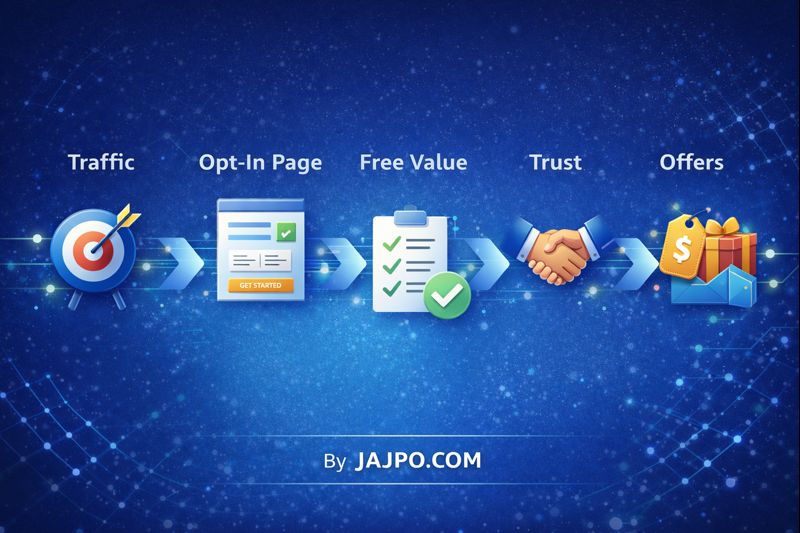
1 . You Build Your Own Email List
Never send solo ads traffic directly to an affiliate link.
You must capture:
- Buyer intent signals
- Engagement behavior
Ownership of the list = control of monetization.
2 . You Promote High-Conversion Offers
Certain categories convert better with solo ads traffic:
- Make money online
- Affiliate systems
- Digital marketing tools
- Biz opportunity
- Launch funnels
Low-emotion niches (e.g., SaaS productivity tools) often underperform.
Solo ads traffic is opportunity-driven.
Your offer must match that mindset.
3. You Have Backend Monetization
This is where 80% fail.
If you rely on:
“Buy traffic → Make instant profit.”
You will likely lose money.
But if your structure is:
Traffic → Lead capture → Authority bridge → Email follow-up → Multiple offers
You shift from transactional thinking to asset-building. Only ads become a list-acquisition strategy, not just a sales tactic.
When Solo Ads Fail (Common Affiliate Mistakes)
Let’s be honest.
Most affiliate marketers fail with solo ads because they:
- Send traffic directly to an affiliate link
- Do not track clicks properly
- Use weak opt-in pages
- Have no email follow-up sequence
- Buy cheap solo ads without testing
- Promote saturated low-commission offers
Solo ads amplify flaws. They don’t forgive poor structure.
The 2026 Reality: Traffic Is Smarter
Email subscribers in the MMO niche have seen:
- Hundreds of funnels
- Dozens of launches
- Recycled swipe copy
Which means:
Generic hype no longer works.
To convert solo ads traffic today, you need:
- Positioning
- Authority framing
- Clear value proposition
- Transparent expectations
If your bridge page looks like every other affiliate page, performance drops immediately.
Is It Still Worth It?
Solo ads for affiliate marketing are profitable in 2026 if:
- You treat leads as long-term assets
- You calculate lifetime value
- You test vendors carefully
- You optimize funnels based on data
- You avoid “cheap traffic” traps
They are not beginner-friendly gambling traffic.
They are conducting controlled traffic testing.
When used correctly, they provide:
- Rapid list growth
- Offer validation
- Launch leverage
- Funnel optimization data
Used incorrectly, they become expensive lessons.
Where Most Beginners Lose Money
They do one of three things:
- Buy 500 clicks immediately
- Choose the cheapest vendor
- Skip tracking completely
And then conclude:
“Solo ads don’t work.”
In reality, they skipped the testing phase.
How Much Do Solo Ads Cost? (Including Cheap Solo Ads Explained)
The cost of solo ads depends on three main variables:
- Traffic quality
- Geography (Tier 1 vs Tier 2)
- Vendor reputation
Let’s break it down precisely.
Average Solo Ads Cost Per Click (CPC) in 2026
Here’s the realistic pricing landscape:
- Tier 2 traffic (Asia, Latin America, Eastern Europe):
$0.35 – $0.55 per click - Tier 1 traffic (US, UK, Canada, Australia):
$0.60 – $1.20 per click - Premium buyer lists:
$0.90 – $2 per click
If someone is offering $0.25 clicks, you should immediately ask:
What kind of list produces traffic that cheap?
In most cases, ultra-cheap solo ads come from:
- Over-mailed lists
- Freebie-focused subscribers
- Low buyer intent segments
- Weak engagement
Cheap does not automatically mean scam.
But ‘cheap’ almost always means a lower conversion probability.
What “Cheap Solo Ads” Really Mean?
The phrase “cheap solo ads” is searched for thousands of times per month. But “cheap” can mean two different things:
Cheap in Price: Low CPC, high opt-in rate, low buying behavior.
Cheap in ROI: Higher CPC, but stronger buyer list, lower cost per sale.
Serious affiliates focus on:
- Cost per lead
- Cost per buyer
- Return on investment
Not just CPC.
A $0.90 click that produces sales is cheaper than a $0.40 click that produces nothing.
Realistic Testing Budget
If you’re planning to buy solo ads, here’s the safe testing framework:
- Start with 100–200 clicks
- Never scale without data
- Track opt-in rate
- Track cost per subscriber
- Track offer conversion
For example:
200 clicks at $0.70 = $140 test budget
If your opt-in rate is 35%, you collect 70 leads.
Your real question becomes:
How much revenue can you generate from those 70 subscribers over 30–60 days?
Solo ads are list acquisition first.
Sales channel second.
Where Most Beginners Lose Money
They do one of three things:
- Buy 500 clicks immediately
- Choose the cheapest vendor
- Skip tracking completely
And then conclude:
“Solo ads don’t work.”
In reality, they skipped the testing phase.
Where to Buy Solo Ads Safely
If you’re looking for a structured solo ads marketplace with:
- Vendor ratings
- Buyer reviews
- Repeat sales tracking
- Click filtering
- Tier 1 filtering options
The most recognized platform in this space is:
Udimi
Udimi operates as a solo ads marketplace where buyers can:
- Compare vendors
- View seller ratings
- See repeat buyer percentages
- Filter by Tier 1 traffic
- Track orders within the platform
Unlike private vendors on social media, marketplaces reduce some risk through transparency.
That doesn’t mean every vendor performs well.
It means you have data before you purchase.
If you decide to test solo ads traffic, start small and evaluate vendors based on:
- Recent reviews
- Percentage of repeat buyers
- Niche alignment
- Realistic pricing
Start with a 100-click test. Measure first. Scale second.
Final Word on Pricing
Solo ads cost more in 2026 than they did years ago. But traffic quality has also evolved.
The question isn’t:
“How cheap can I get clicks?”
The better question is:
“How much can each subscriber generate over time?”
If you understand that, solo ads stop being risky traffic.
They become a controlled acquisition.
Best Solo Ad Providers (2026 List)
If you’re researching the best solo ad providers, you’re past the theory stage.
Now the real question becomes:
Where can you buy solo ads traffic without gambling your budget?
There are three main ways to purchase solo ads:
- Marketplaces
- Independent vendors
- Agency-style providers
Each comes with different risk levels and control mechanisms.
Let’s break them down properly.
Udimi (Most Popular Solo Ads Marketplace)
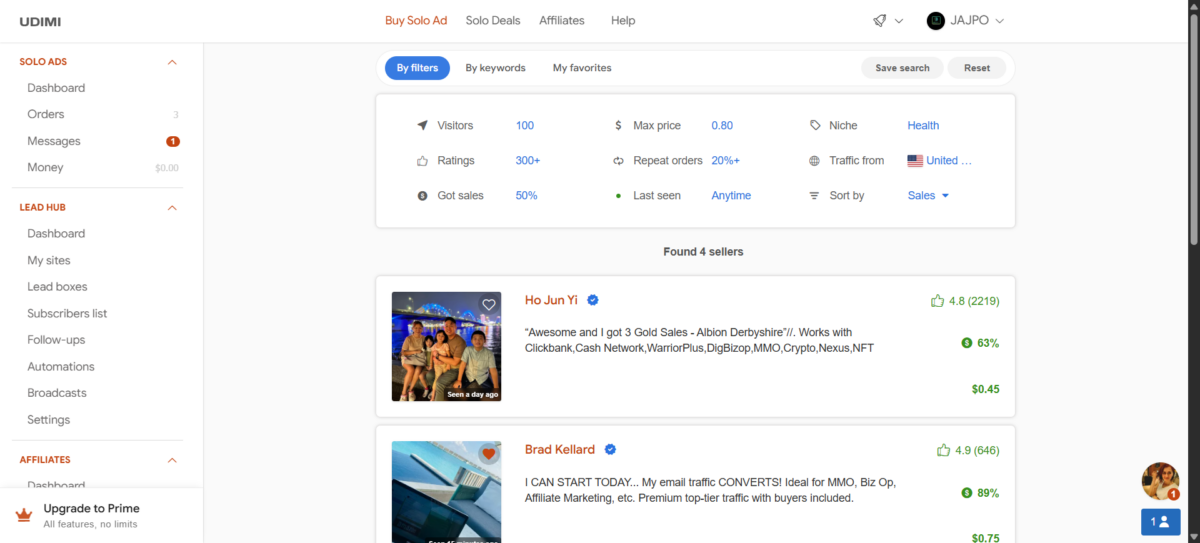
When people search for Udimi solo ads, they’re usually looking for a structured marketplace — not random sellers in Facebook groups.
Udimi operates as a controlled solo ads marketplace where:
- Vendors list their traffic
- Buyers can compare ratings
- Orders are tracked inside the platform
- Click filtering reduces obvious bot traffic
- Repeat buyer percentages are visible
This transparency is what separates marketplaces from private sellers.
Why Many Affiliates Start With Udimi
- Public seller reviews
- Filter by Tier 1 traffic
- Ability to test small orders (100 clicks)
- Built-in click tracking
- Dispute handling system
For beginners, this reduces uncertainty.
What to Look for on Udimi
If you decide to buy solo ads here, evaluate vendors using:
- Minimum 100+ recent reviews
- 20–30%+ repeat buyers
- Realistic CPC (not extreme discounts)
- Recent activity (not inactive sellers)
The repeat buyer metric is critical.
If experienced buyers reorder, it signals consistency.
👉 If you want to compare live vendor stats and current pricing, you can explore Udimi here:
Pros Of Udimi
- Structured solo ads marketplace
- Lower scam risk
- Transparent vendor metrics
- Suitable for controlled testing
Cons Of Udimi
- Still requires vendor vetting
- Traffic quality varies
- MMO-heavy audience
- Competitive space
Udimi is not magic traffic.
It is a structured access to traffic.
Independent Solo Ad Vendors
Outside marketplaces, many vendors operate:
- Through email
- Facebook groups
- Telegram
- Launch networks
These vendors may claim:
- “Private buyer list”
- “High-ticket audience”
- “Fresh traffic only”
Some are legitimate.
Some are not.
Advantages of Independent Vendors
- Potentially stronger relationship-based traffic
- Sometimes better pricing
- Niche-specific lists
Risks
- No review transparency
- No dispute resolution
- Harder to verify repeat buyers
- Higher scam probability
For beginners, independent vendors carry a higher risk.
Experienced marketers with referral connections can perform well.
Solo Ads Marketplace vs Private Sellers
When comparing a solo ads marketplace like Udimi to private vendors, the key difference is:
Visibility vs Trust Dependency.
Marketplace = Public metrics + transparency
Private seller = Relationship-based trust
If you’re new to solo ads traffic, marketplaces reduce uncertainty.
If you’re experienced and have referrals, private vendors may offer higher-quality lists.
Are There Other “Best Solo Ad Providers”?
You may see agency-style providers offering:
- Managed solo ad campaigns
- Higher-ticket traffic
- Premium buyer lists
These are usually:
- More expensive
- Less transparent
- Relationship-based
For most affiliate marketers, structured marketplaces remain the safest starting point.
How to Evaluate the “Best” Provider?
The best solo ad provider is not the cheapest.
It is the vendor that produces:
- Acceptable opt-in rate
- Acceptable cost per lead
- Positive backend ROI
Ignore hype metrics.
Focus on measurable outcomes.
Pros and Cons of Solo Ads
Before you decide to buy solo ads traffic, you need a balanced view. Solo ads are neither miracle traffic nor guaranteed loss.
They are a tool.
And like any tool, performance depends on how it’s used. Let’s examine the advantages and disadvantages clearly.
Advantages of Solo Ads
1. Immediate Traffic
Unlike SEO or organic social media, solo ads deliver traffic within hours.
- No waiting for rankings
- No algorithm learning phase
- No ad account approval
If you need fast data on a funnel or offer, solo ads provide it quickly.
2 . Simple Entry Barrier
Compared to platforms like Google Ads or Facebook Ads:
- No campaign structure complexity
- No creative compliance rules
- No ad disapproval risk
You provide:
- A landing page
- An email swipe
- A budget
The vendor handles distribution.
For affiliates without media buying experience, this lowers friction.
3. Email List Growth
Solo ads are highly effective for:
- Building an email list quickly
- Testing lead magnets
- Validating funnel conversion rates
If your goal is subscriber acquisition rather than immediate profit, solo ads traffic can be strategic.
4. Offer Testing
Before scaling paid ads, some marketers use solo ads to:
- Test conversion rates
- Measure engagement
- Evaluate niche interest
It’s faster than waiting months for organic data.
4. No Platform Algorithm Dependency
When running paid ads, you depend on:
- Account stability
- Platform compliance
- Algorithm optimization
With solo ads, there is no ad account to suspend.
You’re renting email exposure directly.
Disadvantages of Solo Ads
Now the critical side.
1. Traffic Quality Varies
Not all vendors maintain strong list hygiene.
Common issues:
- Over-mailed subscribers
- Freebie-seeking audiences
- Low buyer intent
Even within a marketplace, performance can differ drastically between vendors.
2. No Buyer Guarantee
You are buying clicks — not sales.
A vendor can deliver:
- 200 legitimate clicks
- Strong opt-in rate
And still produce zero sales.
Traffic volume does not equal revenue.
3. Dependent on Vendor Integrity
With solo ads, you rely on:
- Vendor list quality
- Honest traffic filtering
- Accurate delivery
If the vendor’s list is weak, your results suffer — even if your funnel is strong.
4. Rising CPC Costs
In 2026, solo ads cost more than they did years ago.
Higher CPC means:
- Smaller margin for error
- Greater importance of backend monetization
You cannot rely solely on front-end commissions.
5. Limited Niches Perform Well
Solo ads perform best in:
- Make money online
- Affiliate marketing
- Biz opportunity
- Online entrepreneurship
They typically underperform in:
- Local services
- Physical products
- Highly specialized B2B niches
The traffic mindset must match the offer.
Strategic Summary
Solo ads are powerful for:
- Rapid testing
- List building
- Affiliate marketing funnels
But risky for:
- Beginners without tracking
- Marketers expecting instant ROI
- Those promoting low-commission offers
Used intelligently, solo ads become controlled acquisition traffic.
Used blindly, they become an expense.
How to Avoid Getting Scammed with Solo Ads
Let’s address this directly.
Yes — people lose money with solo ads.
But most losses result from poor due diligence, not elaborate scams. If you approach solo ads like an investment instead of a gamble, your risk drops significantly.
Here’s how to protect yourself.
1. Understand What You’re Buying
You are buying clicks, not:
- Sales
- Signups
- Conversions
A legitimate vendor can deliver real human clicks and you can still lose money if:
- Your funnel is weak
- Your offer doesn’t match the audience
- Your follow-up is poor
Not every bad result equals fraud.
Separate performance issues from actual scams.
2. Never Trust “Guaranteed Sales” Claims
If a vendor says:
- “Guaranteed 5 sales from 100 clicks”
- “My traffic always converts”
- “100% buyer traffic”
That’s a red flag.
No one controls how your funnel converts.
The only thing a vendor controls is traffic delivery.
Professional vendors talk about:
- Click quality
- Niche alignment
- List engagement
Not guaranteed income.
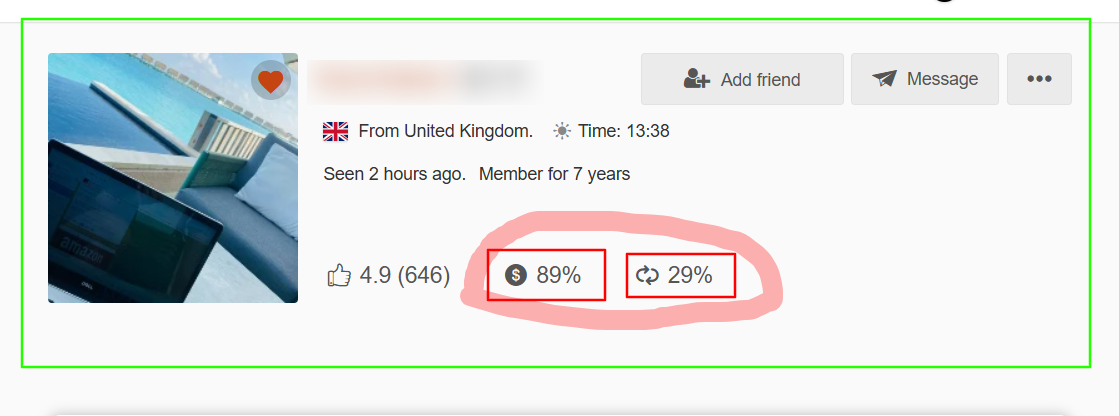
3. Check Repeat Buyer Percentage
On structured marketplaces, look at:
- Repeat buyer rate
- Recent reviews
- Consistency over time
Repeat buyers are a strong signal.
If experienced marketers reorder from the same vendor, that usually indicates stable traffic quality.
If you’re evaluating vendors on a marketplace like Udimi, the repeat buyer metric is more meaningful than raw review count.
High reviews with low repeat orders can signal inconsistent performance.
4. Avoid Extremely Cheap Offers
If someone offers:
“200 Tier 1 clicks for $40”
Pause.
High-quality Tier 1 traffic has a cost structure.
When pricing looks unrealistically low, ask:
- How was the list built?
- How often is it mailed?
- What is the engagement rate?
Sometimes, cheap solo ads are just overused lists that no longer respond.
You may get real clicks — but zero buyers.
5. Always Use Tracking
Never buy solo ads without tracking.
At minimum:
- Use UTM parameters
- Check Google Analytics
- Monitor bounce rate
Better:
- Use a click tracker
- Track unique vs duplicate clicks
- Monitor opt-in rate
If you cannot measure:
- Opt-in rate
- Cost per lead
- Cost per sale
You cannot diagnose performance.
Blind buying is how budgets disappear.
6. Start Small — Always
Your first order should be:
100–200 clicks maximum.
This is not about being cautious.
It’s about data collection.
If the vendor performs well:
- Acceptable opt-in rate
- Clean traffic
- No suspicious bounce patterns
Then you test again.
Scaling without testing is how beginners burn capital.
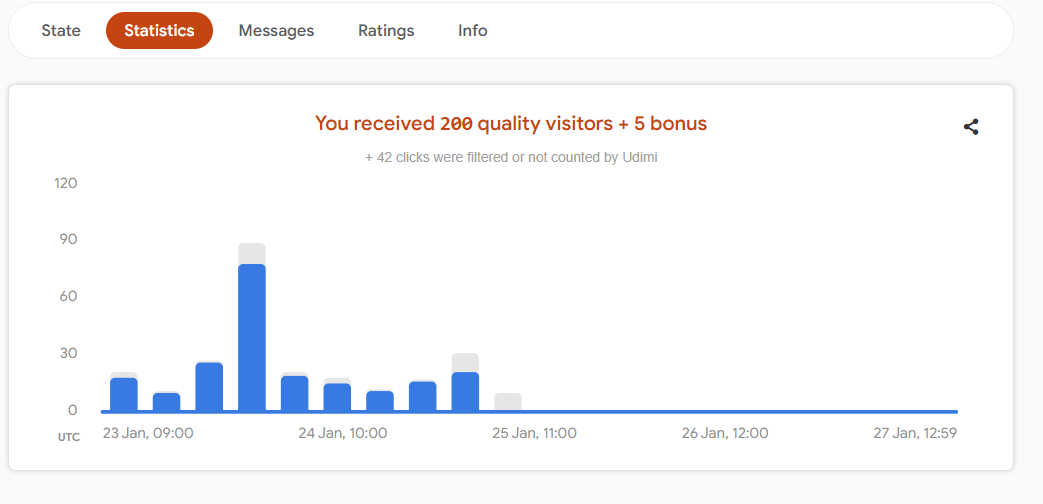
7. Watch for Traffic Behavior Signals
After traffic hits your page, analyze:
- Bounce rate
- Time on page
- Opt-in rate
If you see:
- 90% bounce rate
- 5-second average session time
That may indicate low-quality traffic.
But if bounce rate is moderate and opt-in rate is reasonable, the issue may be your offer — not the vendor.
Be analytical, not emotional.
8. Separate “Low Conversion” from “Scam.”
Important mindset shift.
If you buy 200 clicks and get:
- 70 leads
- 0 sales
That is not automatically a scam.
It may mean:
- Weak pre-sell
- Poor offer-market match
- List not aligned with your niche
Accusing vendors without examining your own funnel is common — and often incorrect.
Logical Conclusion
Most solo ad “scams” fall into one of three categories:
- Unrealistic expectations
- No tracking
- Choosing the cheapest option without evaluation
If you:
- Test small
- Track everything
- Evaluate data
- Avoid hype claims
Your risk becomes manageable.
Solo ads are not inherently dangerous.
They are simply unregulated traffic compared to ad platforms.
And unregulated environments require disciplined buyers.
Solo Ads Funnel That Actually Converts
Let’s be direct.
Solo ads traffic is not “cold” like Facebook traffic.
It is:
- Promotion-aware
- Opportunity-seeking
- Used to seeing affiliate offers
- Often skeptical
If you send that traffic directly to an affiliate link, you are almost guaranteed to underperform.
A converting solo ads funnel has structure.
Not complexity — structure.
The Correct Solo Ads Funnel Framework
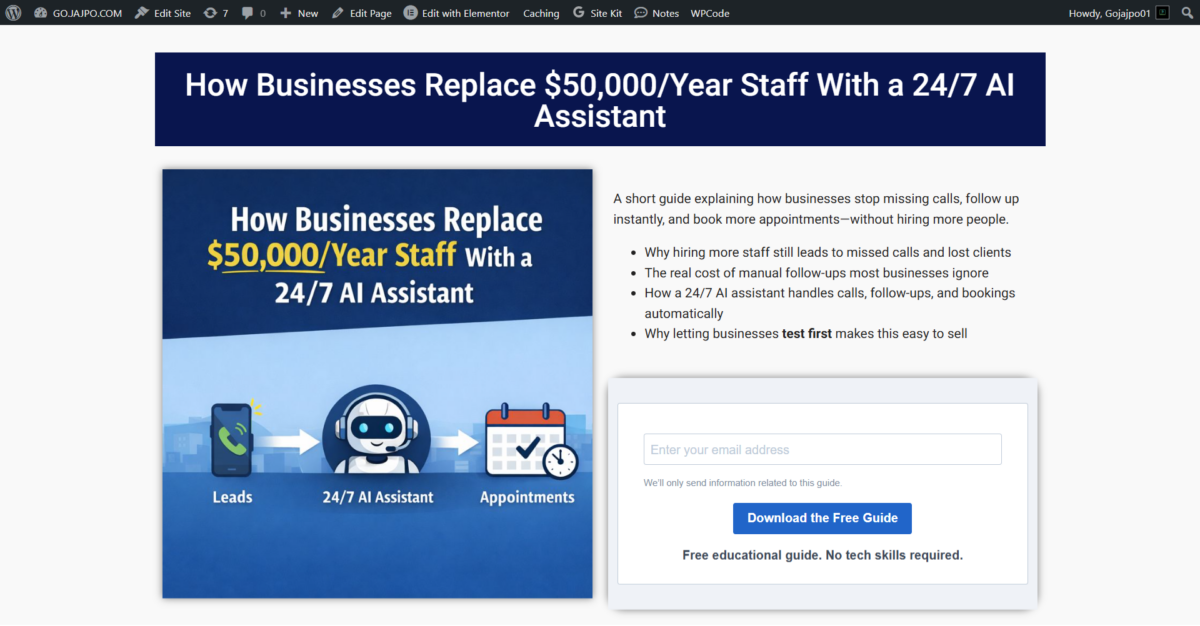
The optimal flow looks like this:
Solo Ad Click → Opt-in Page → Bridge Page → Offer → Email Follow-Up
Every step has a psychological function.
Remove one, and the conversion weakens.
Step 1: The Opt-in Page (Attention Filter)
Your opt-in page should:
- Be distraction-free
- Have one clear promise
- Match the email swipe angle
- Avoid hype screenshots
- Avoid overcomplicated design
Goal:
Convert traffic into leads — not sell immediately.
Ideal opt-in rate for solo ads traffic:
30%–45%
If you’re below 25%, your headline or positioning likely needs work.
If you’re above 50%, you may be attracting freebie seekers.
A high opt-in rate is not always better.
The qualified opt-in rate is better.
Step 2: The Bridge Page (Authority Transfer)
This is the step most affiliates skip.
The bridge page is where you:
- Position yourself
- Frame the offer
- Set expectations
- Remove objections
Instead of:
“Here’s the product, go buy.”
You say:
“Here’s why I’m recommending this — and who it’s actually for.”
A simple structure works best:
- A short 2–3 minute video or concise written breakdown
- Explain the problem
- Explain why this offer solves it
- Clarify who should not buy
- Clear CTA button
This builds trust.
Solo ads traffic has seen hundreds of generic affiliate pages.
Authority framing separates you from the noise.
Step 3: The Offer Page
At this stage, you are no longer introducing the idea.
You are reinforcing a decision.
If your bridge page did its job, the offer page becomes confirmation — not persuasion from scratch.
Without a bridge page, the sales page must do all the work alone.
That’s a heavy burden.
Step 4: Email Follow-Up (Where Real Profit Happens)
Here’s the uncomfortable truth:
Most profit from solo ads does not happen on day one.
It happens in:
- Day 3
- Day 7
- Day 14
- Day 30
Your email sequence should:
- Reinforce the problem
- Share micro insights
- Address objections
- Introduce complementary offers
- Segment engaged subscribers
If you collect 70 leads from 200 clicks, those 70 leads are now an asset.
Without follow-up, that asset decays.
Exit-Intent Strategy (Advanced Layer)
If someone reaches your bridge page and does not click the offer:
Use an exit-intent popup to:
- Offer a bonus
- Offer a checklist
- Reframe urgency
This gives you one final engagement opportunity.
Used correctly, this increases:
- Click-through rate
- List engagement
- Conversion probability
Used aggressively, it feels desperate.
Balance matters.
The Conversion Amplifier Principle
Solo ads do not fix weak funnels.
They amplify what exists.
If your funnel converts:
- Solo ads can scale it.
If your funnel leaks:
- Solo ads magnify the loss.
Before scaling traffic, ask:
- Is my opt-in page converting above 30%?
- Is my bridge page pre-selling properly?
- Do I have a structured follow-up sequence?
- Am I tracking cost per lead?
If the answer to any is no, fix the structure before increasing the spend.
Final Funnel Reality Check
The marketers who profit consistently from solo ads treat it as:
List acquisition with backend monetization.
The marketers who lose treat it as:
Immediate sales traffic.
That mindset difference determines outcome.
If you’re serious about using solo ads the right way, your focus should not be “How fast can I make money?”
It should be:
- How do I build a converting funnel?
- How do I position the offer properly?
- How do I structure follow-up for long-term revenue?
If you want a done-for-you system that already includes:
- Funnel structure
- Email follow-up framework
- Offer positioning
- Monetization strategy
You can explore the platform I personally recommend here:
Study the structure.
Notice how the funnel is built.
Pay attention to how the offer is positioned.
That’s the level of clarity solo ads traffic requires.
My Solo Ads Experience (Real Data Case Study)
I don’t approach solo ads casually.
I test them as a performance marketer — with tracking, structured funnels, and defined metrics.
Here’s a transparent breakdown of how I’ve used solo ads traffic in practice.
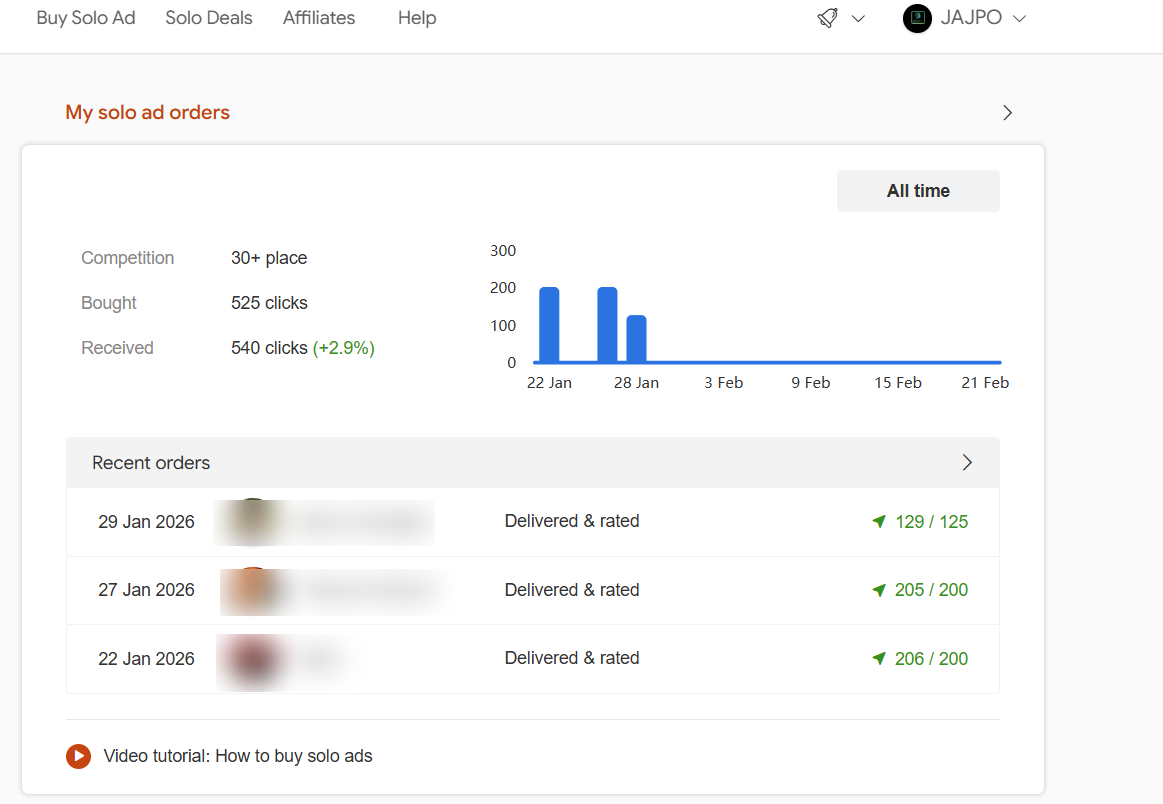
Campaign Objective
The goal was not instant profit.
It was:
- Lead acquisition
- Funnel validation
- Offer testing
- Email list growth
Traffic source: Solo ads marketplace vendors
Funnel structure:
Opt-in → Bridge page → Offer → Email follow-up
Tracking:
Google Analytics + UTM parameters + opt-in tracking
Test #1 — 200 Click Campaign
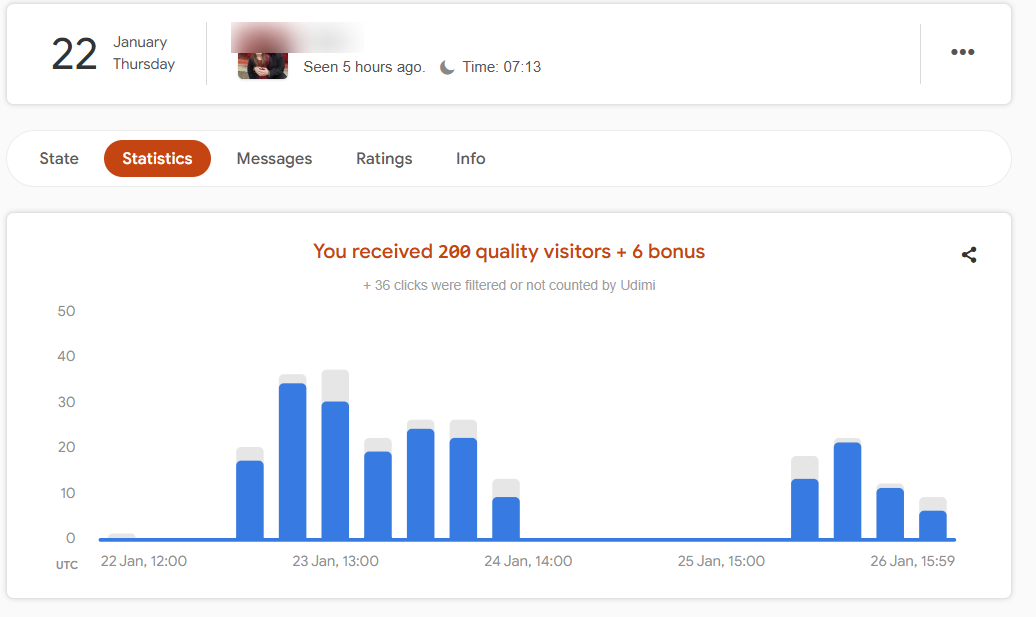
Traffic Type: Tier 1
Average CPC: $0.61
Investment: Approx. $121
Results:
- Opt-in rate: ~32–38%
- Leads generated: 75
- Immediate front-end sales: Zero
On day one, results looked modest.
But that was expected.
The objective was list building, not instant ROI.
What Worked
1. Controlled Funnel Structure
The opt-in page was minimal:
- Single promise
- No distractions
- No external links
The bridge page positioned the offer clearly instead of pushing hype.
That improved click-through consistency.
2. Email Follow-Up Strategy
Over the next 14–30 days:
- Engagement came from follow-up emails
- Some subscribers converted later
- Behavioral signals identified serious prospects
This reinforced a key insight:
Solo ads traffic rarely converts heavily on day one.
It converts through sequencing.
What Didn’t Work Initially?
1. Weak Pre-Sell Angle
Early tests showed:
- Good opt-ins
- Low offer clicks
That signaled a bridge-positioning issue, not a traffic issue.
Once messaging was refined, click-through improved.
2. Expecting Too Much From Front-End Sales
In early solo ads experiments (years ago), I evaluated success purely on:
“Did it convert immediately?”
That mindset led to disappointment.
When I shifted to:
Cost per subscriber + lifetime value
The strategy made more sense.
Key Metrics I Now Focus On
When I buy solo ads traffic today, I measure:
- Cost per click (CPC)
- Opt-in rate
- Cost per lead
- 30-day subscriber value
- Engagement rate
- Reply rate
Not just instant commissions.
This prevents emotional decision-making.
The Most Important Lesson
Solo ads are not magic traffic.
They are amplified traffic.
If your funnel is:
- Structured
- Pre-sold properly
- Followed up consistently
You can build a responsive list.
If your funnel is weak, solo ads will expose it immediately.
My Personal Position on Solo Ads in 2026
I don’t treat solo ads as:
“Push button profit traffic.”
I treat them as:
- A list-building accelerator
- A funnel testing tool
- A data collection channel
When approached that way, they are valuable. When approached as gambling traffic, they become expensive.
Solo Ads vs Google Ads Vs Meta Ads (Facebook Ads)
If you’re deciding between solo ads, Google Ads, or Meta Ads (Facebook/Instagram), the real question isn’t:
“Which is best?”
It’s:
Which traffic source matches your skill level, budget, and business model?
Each platform operates under a completely different ecosystem.
Let’s compare them properly.
Platform Overview
- Solo Ads → Rent traffic from a vendor’s email list
- Google Ads → Intent-based search & display advertising
- Meta Ads → Interest & behavior-based social targeting
Now let’s break this down side by side.
Traffic Comparison Table:
| Factor | Solo Ads | Google Ads | Meta Ads |
|---|---|---|---|
| Traffic Type | Email list clicks | Search & Display intent traffic | Social interest-based traffic |
| Intent Level | Medium (opportunity-driven) | High (search intent) | Low to Medium (interest-based) |
| Learning Curve | Low to Moderate | High | Moderate to High |
| Setup Complexity | Simple | Advanced campaign structure | Creative + targeting testing |
| Speed of Traffic | Immediate | Immediate | Immediate |
| Account Risk | No ad account needed | Possible suspensions | Frequent compliance risk |
| CPC Range (2026) | $0.40–$1.20 | $0.50–$5+ (varies by niche) | $0.30–$3+ (varies by niche) |
| Best For | Affiliate funnels, list building | High-intent offers, local services, SaaS | E-commerce, lead gen, brand building |
| Tracking Required | Essential | Essential | Essential |
| Scalability | Vendor dependent | Highly scalable | Highly scalable |
| Data Control | Limited | Full control | Full control |
Solo Ads: When They Make Sense
Solo ads are best when:
- You want to build an email list quickly
- You’re promoting affiliate or biz opp offers
- You don’t want ad account compliance issues
- You want fast funnel testing
They are less ideal for:
- Local services
- Physical products
- Highly niche B2B offers
Solo ads are transactional exposure.
They are not algorithmic advertising.
Google Ads: When They Dominate
Google Ads excel when:
- Users are actively searching for solutions
- You have high-converting landing pages
- You understand the keyword bidding strategy
- You can handle campaign optimization
Search traffic often has higher buying intent.
But it requires:
- Strong keyword research
- Negative keyword management
- Budget discipline
Without experience, costs escalate quickly.
Meta Ads: When They Perform Well
Meta Ads (Facebook & Instagram) are strong for:
- Visual products
- E-commerce
- Brand building
- Retargeting
But they require:
- Creative testing
- Audience testing
- Constant optimization
Ad fatigue and compliance risks are common.
Which Is Better for Affiliate Marketing?
For beginners:
Solo ads are simpler to test but riskier if the funnel is weak.
For advanced marketers:
Google Ads offer better scalability and buyer intent.
For brand builders and product owners:
Meta Ads allow stronger long-term brand positioning.
The Real Decision Framework
Ask yourself:
- Do I have a strong funnel?
- Do I understand tracking?
- Do I want quick list growth or scalable paid ads?
- Can I handle platform compliance?
If you’re building an email-driven business model, solo ads can accelerate list growth.
If you’re running a high-ticket or local offer, Google Ads may outperform.
If you’re selling physical products, Meta Ads likely win.
Strategic Conclusion
There is no universally “best” traffic source.
There is only:
- The right tool for your funnel
- The right tool for your skill level
- The right tool for your monetization model
Many experienced marketers eventually combine all three.
But beginners should master one before diversifying.
Are Cheap Solo Ads Worth It?
The term cheap solo ads sounds attractive.
Lower cost per click.
Lower risk.
Lower investment.
But in solo ads, “cheap” can mean two very different things.
And understanding that difference is critical.
What Most People Mean by “Cheap”
When someone searches for cheap solo ads, they usually mean:
- $0.30–$0.45 CPC
- Low minimum order size
- Fast delivery
- Tier 1 traffic at discount pricing
The problem?
High-quality email traffic has a cost structure.
If a vendor consistently sells traffic at a significantly below-market rate, you should ask why.
When Cheap Solo Ads Can Work
Cheap solo ads can be worth it in specific situations:
1 You’re Testing a Lead Magnet
If your goal is to test:
- Headline conversion
- Opt-in rate
- Funnel flow
Then, low-cost traffic can provide fast data.
Even ifthe buyer’s intent is weak, you still learn about your page performance.
2. You’re Building Volume for Engagement Segmentation
If your strategy includes:
- Cleaning your list
- Segmenting engaged subscribers
- Warming new leads gradually
Cheap traffic may help expand reach.
But understand:
You may need a stronger follow-up to monetize effectively.
3. You’re Running Backend Monetization
If you have:
- Multiple offers
- Upsells
- Cross-sells
- Long-term email sequences
Lower-cost leads can still become profitable over time.
But this requires patience and structure.
When Cheap Solo Ads Are Dangerous
Cheap solo ads become risky when:
- You expect instant front-end sales
- You’re promoting low-commission offers
- You have no email sequence
- You skip tracking
Low-cost traffic with weak buyer intent usually produces:
- High opt-in
- Low revenue
That creates false optimism at first… then disappointment.
Cheap vs Profitable: The Real Metric
Instead of asking:
“How cheap can I buy clicks?”
Ask:
“What is my cost per qualified subscriber?”
A $0.90 click that produces:
- 30% opt-in
- 2–3 backend sales
Is cheaper than a $0.40 click that produces nothing.
Cheap CPC does not equal cheap acquisition.
How to Test Cheap Solo Ads Safely?
If you want to experiment:
- Start with 100 clicks
- Track opt-in rate
- Monitor bounce rate
- Evaluate 30-day revenue per subscriber
- Compare against higher-priced vendors
Make decisions based on data — not emotion.
Practical Perspective
In 2026, average Tier 1 traffic ranges between $0.60–$1.00+ per click.
Anything significantly below that should be evaluated carefully.
Cheap traffic is not automatically bad.
But in solo ads, extreme discounts usually correlate with:
- Overused lists
- Lower engagement
- Reduced buying behavior
That doesn’t make them scams.
It just means expectations must be adjusted.
Final Take on Cheap Solo Ads
Cheap solo ads are worth testing — not trusting blindly.
If your funnel is strong and your follow-up is structured, you may extract value.
If your strategy relies on immediate ROI, cheap traffic will likely disappoint.
Always measure performance by:
- Cost per lead
- Cost per buyer
- 30–60 day subscriber value
Not just CPC.
Who Should Use Solo Ads (And Who Should Avoid Them?)
Solo ads are not universal traffic.
They work exceptionally well in certain scenarios — and poorly in others.
Before you decide to buy solo ads traffic, see where you fit.
Solo Ads Suitability Table
| Profile | Should Use Solo Ads? | Why / Why Not |
|---|---|---|
| Affiliate Marketers (MMO / Biz Opp) | ✅ Yes | Audience mindset aligns well with opportunity-driven offers. |
| Email List Builders | ✅ Yes | Fast way to acquire subscribers for backend monetization. |
| Launch Promoters | ✅ Yes | Can drive immediate traffic during limited-time launches. |
| Funnel Testers | ✅ Yes | Useful for validating opt-in rates and offer positioning quickly. |
| High-Ticket Coaches (Online Biz) | ⚠ Maybe | Traffic will expose the weak structure immediately. |
| SaaS / B2B Tool Promoters | ❌ Usually No | Solo ads audience rarely matches specialized B2B intent. |
| Local Service Businesses | ❌ No | Audience targeting is too broad and not geo-specific. |
| Physical Product E-commerce | ❌ No | Social platforms perform better for visual products. |
| Complete Beginners (No Funnel) | ❌ No | A fast way to acquire subscribers for backend monetization. |
| Marketers Without Tracking | ❌ No | Works if the funnel is strong and the pre-sell is clear. |
The Key Pattern
Solo ads perform best when:
- You control an email list
- You understand funnel psychology
- You track the cost per lead
- You think long-term monetization
They perform poorly when:
- You expect instant profit
- You skip the follow-up
- You lack positioning clarity
Simple Decision Framework
Ask yourself:
- Do I have a working opt-in page?
- Do I have at least a basic email sequence?
- Am I prepared to test with 100–200 clicks first?
- Am I measuring 30-day subscriber value?
If you answer “no” to most of these, improve structure before buying traffic.
Solo ads reward preparation.
They punish shortcuts.
Final Verdict: Are Solo Ads Still Worth It in 2026?
Yes — but not for everyone.
Solo ads are still relevant in 2026. They are still used by serious affiliate marketers.
They still build email lists quickly. But they are no longer beginner-proof traffic. The landscape has matured.
Email subscribers in the make-money-online and affiliate space are:
- More experienced
- More skeptical
- Exposed to countless offers
Which means weak funnels fail faster than ever.
When Solo Ads Are Worth It?
Solo ads make strategic sense when:
- You are building an email-driven business
- You understand backend monetization
- You have a structured funnel
- You track cost per lead and subscriber value
- You test before scaling
Used this way, solo ads become:
A list acquisition accelerator.
Not a lottery ticket.
When Solo Ads Are Not Worth It?
They are not worth it if:
- You expect instant profit from 100 clicks
- You have no follow-up sequence
- You send traffic directly to an affiliate link
- You chase the cheapest CPC available
In those situations, solo ads feel expensive — because the structure behind them is weak.
The Real Question
The better question isn’t:
“Do solo ads work?”
The real question is:
“Does my funnel convert traffic into long-term revenue?”
Solo ads expose the answer quickly.
If your system is solid, they can scale it.
If your system leaks, they reveal it.
Strategic Recommendation
If you’re new:
Start small.
Track everything.
Improve your funnel before increasing spend.
If you’re experienced:
Use solo ads strategically for:
- List growth
- Offer testing
- Launch momentum
Combine them with other traffic sources once your backend proves profitable.
Bottom Line
Solo ads are neither hype nor scam.
They are structured exposure to an existing audience.
Your results depend on:
- Vendor quality
- Funnel strength
- Follow-up discipline
- Monetization depth
Approach them with data and patience — not expectation and emotion. Used correctly, solo ads remain a viable traffic channel in 2026. Used carelessly, they become an unnecessary expense.
Frequently Asked Questions About Solo Ads
Are solo ads legit?
Yes, solo ads are legitimate.
You pay a vendor to send your offer to their email list, and you receive clicks in return.
However, legitimacy does not guarantee profitability. Results depend on:
- Vendor list quality
- Funnel structure
- Offer-market alignment
- Follow-up strategy
Solo ads are a traffic method — not a guarantee of sales.
How many clicks should I buy?
For beginners, start with:
100–200 clicks maximum.
This allows you to:
- Test opt-in rate
- Measure cost per lead
- Evaluate traffic quality
- Analyze funnel performance
Never scale before validating performance with small tests.
What is a good opt-in rate?
A healthy opt-in rate typically falls between:
30% and 45%
Below 25% usually signals:
- Weak headline
- Poor offer alignment
- Funnel mismatch
Above 50% may indicate freebie-focused traffic rather than buyer intent.
Quality matters more than raw percentage.
Are Udimi solo ads safe?
Udimi operates as a structured solo ads marketplace with:
- Vendor ratings
- Buyer reviews
- Repeat purchase metrics
- Basic click filtering
This reduces risk compared to private sellers.
However, you still need to:
- Evaluate vendor reviews carefully
- Test with small orders
- Track performance independently
No marketplace guarantees profit.
Can you make money with solo ads?
Yes — but usually not instantly.
Most profitable campaigns rely on:
- Email follow-up
- Backend offers
- Subscriber lifetime value
Expecting front-end profit from 100 clicks often leads to disappointment.
Solo ads work best as a list-building and monetization strategy.
What is Tier 1 traffic in solo ads?
Tier 1 traffic refers to clicks from high-income English-speaking countries such as:
- United States
- United Kingdom
- Canada
- Australia
Tier 1 traffic typically costs more but may offer higher buying power.
Is it better to send solo ads traffic directly to an affiliate link?
No.
Best practice is:
Solo ad → Opt-in page → Bridge page → Offer → Email follow-up
Capturing the email gives you control over long-term monetization.
Sending traffic directly to an affiliate link removes that leverage.
How long does solo ads traffic last?
Delivery typically happens within:
24–72 hours after the vendor sends the email.
However, revenue generation often occurs over:
7–60 days through email follow-up and backend offers.
Traffic delivery is short-term. Monetization is long-term.
Are cheap solo ads worth it?
Cheap solo ads can be useful for testing, but lower CPC often correlates with lower buyer intent.
Always evaluate:
- Cost per lead
- Cost per buyer
- 30-day subscriber value
Not just cost per click.
Final Note
If you’re planning to buy solo ads, focus less on finding the cheapest vendor and more on building a funnel that converts.
Traffic exposes the structure.
Structure determines profit.
About Author

This guide is written by Jajpo — a performance marketer and AI tools reviewer who helps creators build profitable faceless channels using modern AI workflows.
Explore more:
How to Create Faceless AI Videos (Ultimate Guide for 2025)
Top 10 AI Video Generator Tools (2025 Updated)
Best AI Tools for Content Creators in 2025 (Full List + Use Cases)
AI Video Automation Guide (2025): Create Videos Without Editing
2 thoughts on “Solo Ads in 2026: Complete Guide, Best Providers & Real Results”
Comments are closed.